
No Bone? No Problem. Discover Life-Changing Implant Solutions at CARE | Smiles + Skin
Dr. Andy Burton - Diplomate ABOI/ID | Fellow AAID (Board Certified Oral Implantologist)
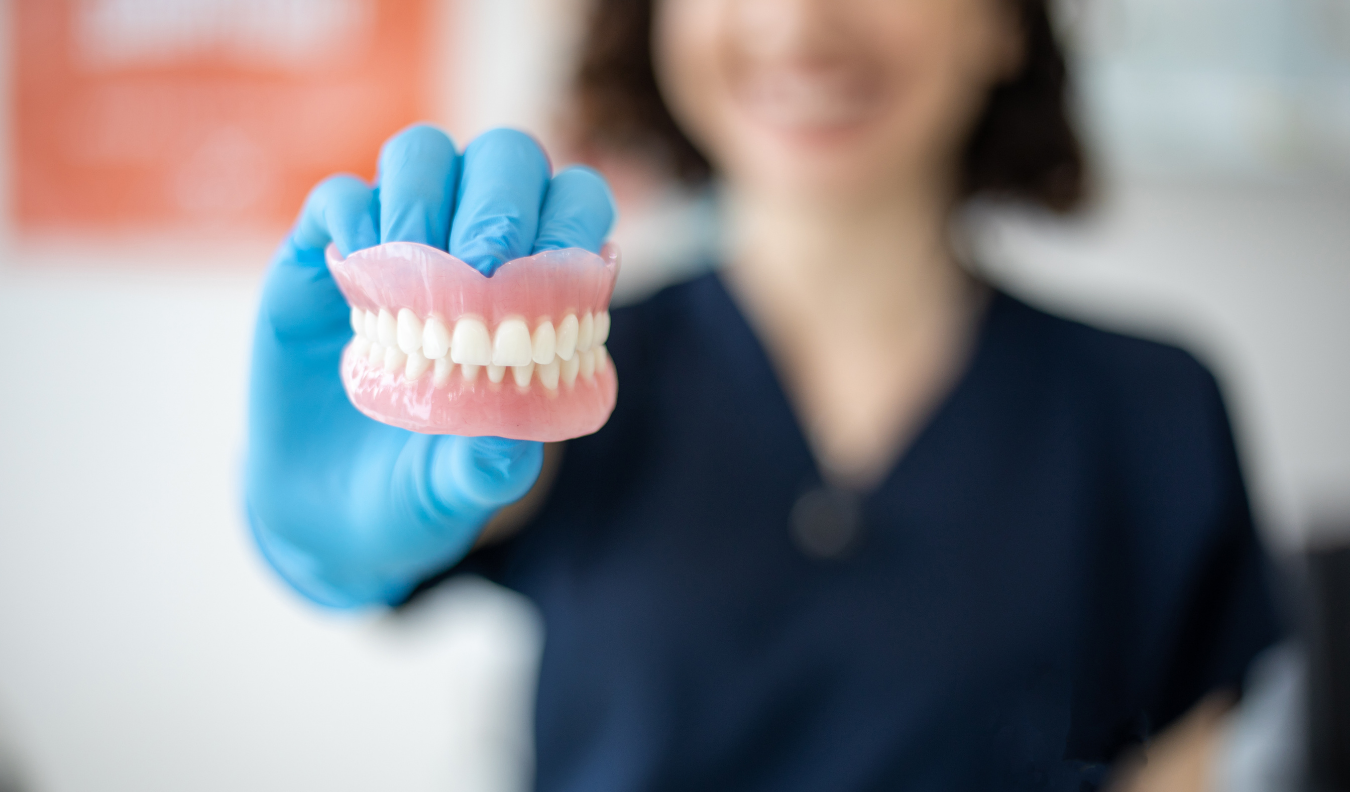
Conventional Dentures are a valid substitute for missing teeth. However, they are associated with decreased bite force, loose fits, and sore gums.
Hearing that traditional dental implants aren’t an option because of severe bone loss can feel discouraging. Many patients are told their only solutions are uncomfortable dentures or complex, lengthy bone grafting procedures. But today, thanks to remarkable advancements in dental technology and techniques, hope is very much alive — even for those facing the most challenging cases.
At CARE | Smiles + Skin, Dr. Andy Burton and our expert team use the latest advanced implant solutions and digital workflows to help patients reclaim complete, functional, and beautiful smiles, no matter how much bone loss they’ve experienced.
When Bone is Scarce: Exploring Specialized Implant Solutions
Traditional implants rely on healthy bone for stability, but if you've been told "you don’t have enough bone," don’t give up — modern dentistry offers several innovative options. Severe atrophy or bone loss can occur in the upper and/or lower jaws from trauma, periodontal disease, and long-term use of conventional dentures.
Upper Jaw - Maxilla
Severe bone loss in the upper jaw (the atrophic maxilla) has traditionally required sinus grafting, bone grafting, or staged reconstruction before implants could be placed. Today, remote anchorage implant solutions—including zygomatic implants and pterygoid implants—allow us to restore function and confidence even in advanced cases of bone atrophy.
What Are Remote Anchorage Implants?
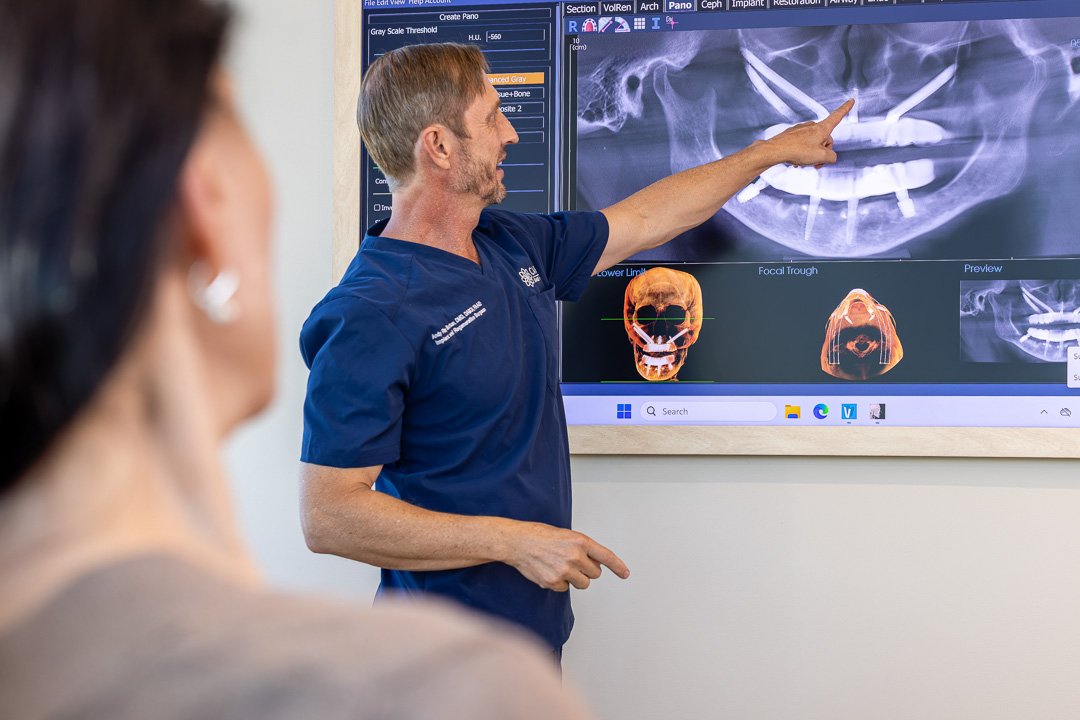
Dr Andy explaining remote anchorage and zygomatic implants during a consultation. Years of extensive advanced training is required to perform remote anchorage implants. Dr. Andy is board-certified by the ABOI/ID.
Remote anchorage implants are longer implants that engage dense, stable bone away from the area of bone loss. Instead of relying on thin or resorbed upper jaw bone, these implants anchor into stronger anatomical structures:
Zygomatic implants anchor into the zygomatic (cheek) bone.
Pterygoid implants engage the dense pterygoid plates at the back of the upper jaw.
Because these areas maintain excellent bone density even when the upper jaw has resorbed, they provide exceptional primary stability.
Why This Matters for Patients with Upper Jaw Atrophy
In patients with advanced maxillary bone loss—often after years of missing teeth, dentures, or periodontal disease—traditional implant placement can be challenging. Remote anchorage techniques offer several advantages:
✔️ Avoidance of large sinus grafts
✔️ Reduced need for extensive bone grafting
✔️ Immediate or early loading in many cases
✔️ Fewer surgical stages
✔️ Faster return to fixed teeth
For many patients, this means transitioning from a loose upper denture to a stable, fixed full-arch restoration—often in a shorter timeline.
Lower Jaw - Mandible
Severe bone loss in the lower jaw (the atrophic mandible) has traditionally required extensive bone grafting, ridge augmentation, or staged reconstruction before implants could be considered. Today, advanced reconstructive solutions—including nerve repositioning, subperiosteal implants, and ramus frame implants—allow us to restore strength, stability, and confidence even in cases of significant mandibular atrophy where conventional implant placement would otherwise be limited.
A Modern Approach to Complex Implant Care
At CARE | Smiles + Skin, we view advanced implant reconstruction through a comprehensive lens—blending surgical precision, prosthetic planning, and long-term tissue health. Remote anchorage techniques like zygomatic and pterygoid implants expand what’s possible for patients who were once told they “don’t have enough bone.”
Severe upper jaw atrophy no longer means limited options. With the right training, technology, and careful case selection, predictable full-arch restoration is achievable—even in complex anatomy.
If you’ve been told you’re not a candidate for dental implants due to bone loss, a specialized evaluation may reveal solutions you didn’t know were possible.
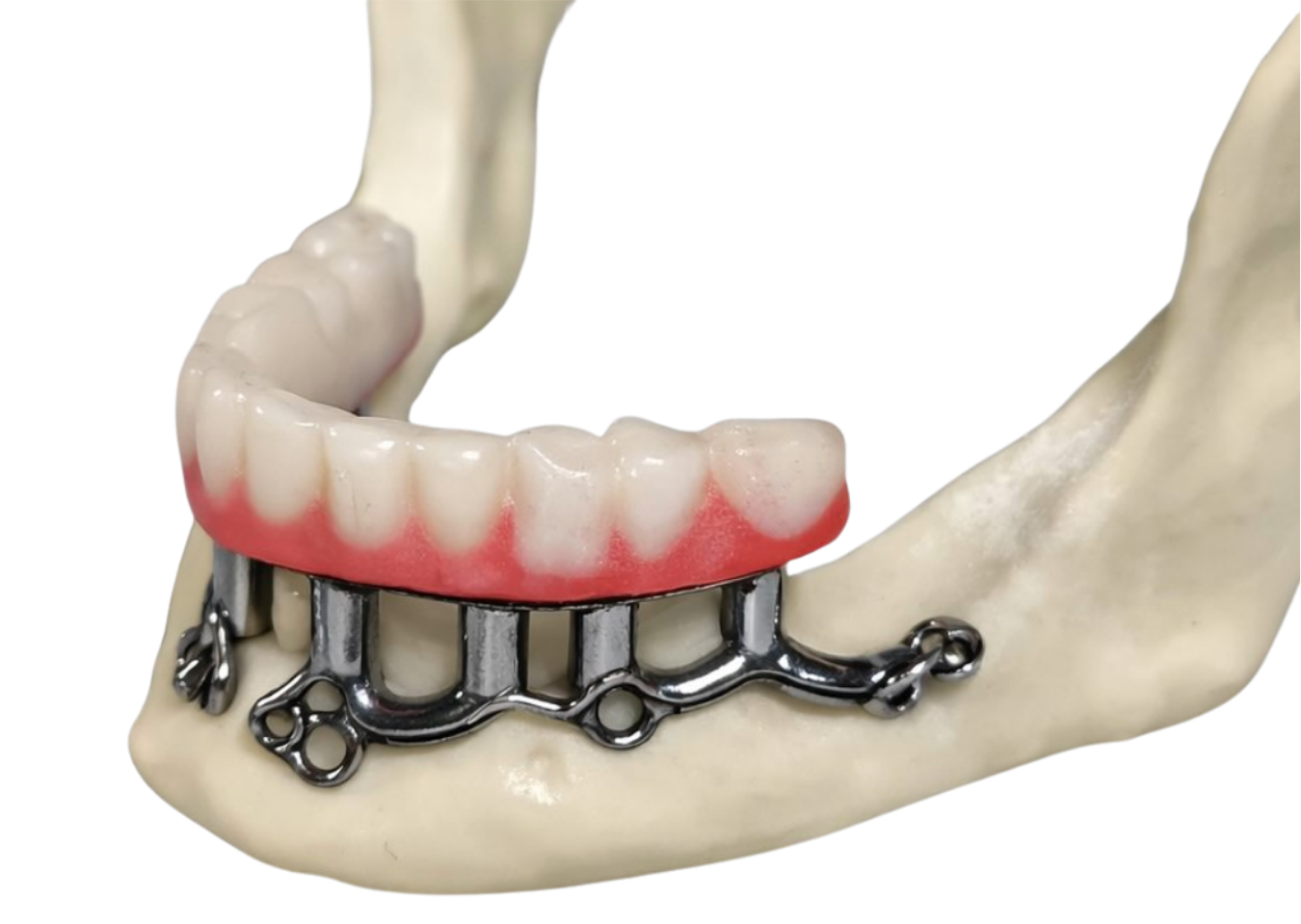
Subperiosteal implant with teeth on a 3D-printed mandible.
Nerve Repositioning (Inferior Alveolar Nerve Lateralization or Transposition)
For significant lower jaw bone loss, the inferior alveolar nerve (IAN) may block safe implant placement. In this advanced technique, the nerve is gently repositioned to create room for implants, then carefully returned to a protected position after placement. Temporary numbness or altered sensation may occur but typically improves over time — and this procedure can open new doors for implant success.
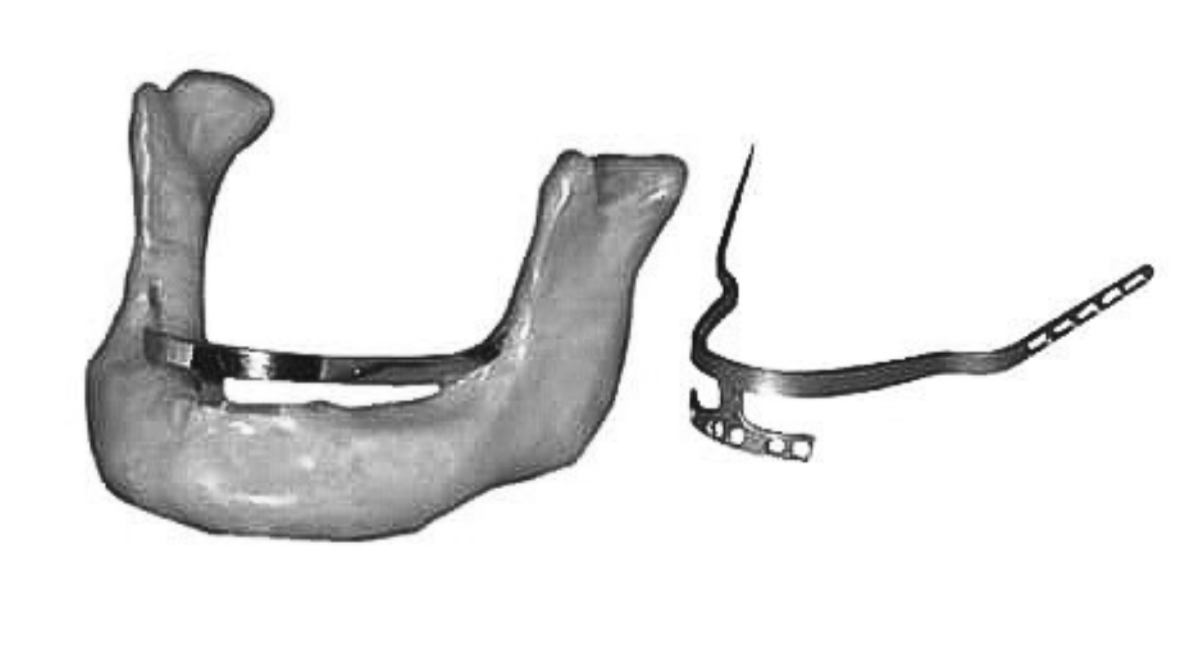
Ramus Frame implant is extremely beneficial for helping stabilize poor-fitting dentures in very frail and weak lower jaw bones.
Custom Subperiosteal Implants
Custom-made to fit perfectly onto your jawbone beneath the gum, subperiosteal implants provide a stable foundation when traditional implants aren't possible. Individually designed using digital imaging and CAD/CAM technology, they allow for immediate loading, meaning faster results without the need for extensive bone grafting.
Ramus Frame Implants
Ideal for narrow or weak lower jaws, ramus frame implants are strategically placed in the back of the jaw and chin area. They provide excellent stability for dentures in cases where traditional implants won't work, helping patients struggling with loose dentures find lasting comfort and function.
The Power of Digital Workflows: Precision and Speed
The success of these advanced procedures is powered by state-of-the-art digital workflows at CARE | Smiles + Skin:
CBCT Imaging & Digital Planning: 3D scans for highly precise, customized treatment.
CAD/CAM Technology: Design and fabrication of custom subperiosteal implants for your unique anatomy.
3D Printing: Surgical guides that ensure precise placement for maximum accuracy and optimal results.
New Teeth Within 24 Hours: Life-Changing Possibilities
One of the most exciting benefits? With advanced techniques and digital workflows, many patients can receive provisional teeth within just 24 hours of implant placement. You can walk out of the office with a functional smile, ready to eat, speak, and laugh with confidence — without waiting months.
Restoring Hope, Smiles, and Quality of Life
At CARE | Smiles + Skin, we believe everyone deserves the chance to smile with confidence again. Dr. Andy Burton and our caring team are dedicated to helping patients who thought they had no options left. With these innovative techniques and personalized care, we’re restoring hope, health, and happiness — one smile at a time.
Severe jaw atrophy no longer means limited options. With the right training, technology, and careful case selection, predictable full-arch restoration is achievable—even in complex anatomy.
If you’ve been told you’re not a candidate for dental implants due to bone loss, a specialized evaluation may reveal solutions you didn’t know were possible.
Take the First Step Toward Your New Smile
👉 Schedule a consultation with Dr. Andy Burton today and discover your possibilities.
👉 Call CARE | Smiles + Skin or request your appointment online — your second chance at a complete smile is closer than you think!
